 Trending in the US
The point in the sketch is on the hand, not in the center of the palm. Doctors often look at the ear and do not mention this shiatsu point. Covering ear ringing with other sound does not turn the signal off. Tinnito™ V2 is the behind-the-ear device people use on that nerve for about 30 to 60 seconds.
The Point Is the Soft Skin Between the Thumb and the First Finger
The old shiatsu trick for ear ringing is a hand pinch. One hand pinches the other hand. The pinch is on the soft skin in the space between the thumb and the first finger. It is not a thumb pressed into the center of an open palm.
Some people press the earlobe. That is a second place people press with a hand. This page is about the pinch between the thumb and the first finger.
This is not a press of the hand on the skin behind the ear. The sketch is two hands. The pinched spot is on the hand. Doctors don't mention this point when they only check the ear.
A press on that soft skin can change the ear ringing for a moment. The change does not mean the ear ringing has ended. It means the signal can change.
A Short Change Shows the Ear-Ringing Signal Can Change
Pinch the soft skin between the thumb and the first finger. For that moment, the ear ringing can change. Let go. The ear ringing can be there again.
That moment is the demonstration. The ear-ringing signal is not fixed, because a press on that point can change it. The pinch is not something that ends ear ringing. The pinch does not cure ear ringing.
Covering the sound is a different act. A radio, a fan, or a podcast can make ear ringing harder to notice. Covering does not turn the signal off. The auricular nerve can stay stuck ON. Stuck ON means the nerve keeps sending the ear-ringing signal after the pinch ends and after the cover ends.
Covering the Sound Is Not Turning the Auricular Nerve Off
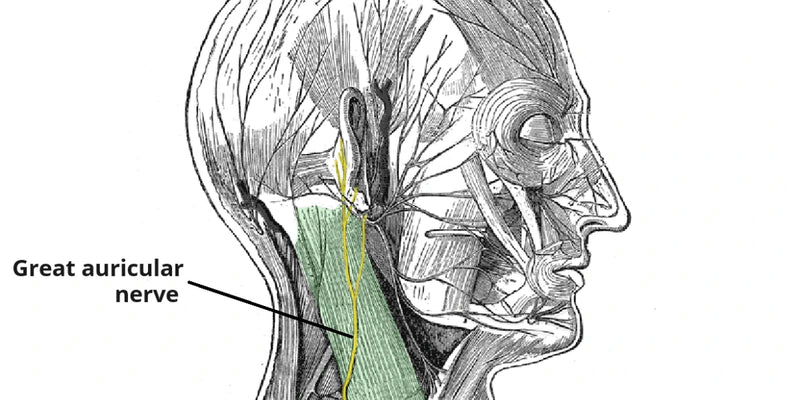
Ear ringing is sound you hear when no outside sound is making it. The auricular nerve is a nerve behind the ear. It can stay stuck ON. Stuck ON means that nerve keeps sending the ear-ringing signal.
People cover that sound. They turn on a radio. They play a podcast. They leave a fan running. The cover can make the ear ringing harder to notice while the other sound is playing. The auricular nerve can still be sending the signal under the cover.
Covering the sound works the way a cloth over a lamp works in this exact way: the cloth changes what you see while the cloth is there, and the lamp can still be on when you take the cloth off. Other sound over ear ringing is the cloth. The auricular nerve that keeps sending the signal is the lamp. The cover is not the same as turning the signal off.
When the other sound ends, the auricular nerve can still be sending the ear-ringing signal. The pinch on the soft skin between the thumb and the first finger can change that signal for a moment. The change shows the signal can change. The pinch is the demonstration on the hand. It is not the device.
Cover, Pills, and "Live With It" Leave the Nerve Sending the Signal
If ear ringing is still there when the cover ends, the list below will be familiar. None of these turns off an auricular nerve that stays stuck ON, meaning the nerve keeps sending the ear-ringing signal.
- Other sound played over the ear ringing — a radio, a podcast, or a fan. The cover can hide the sound. The nerve can keep sending it.
- Pills people take for months — including Lipo-Flavonoid and ginkgo. Many people take them and still hear the ear ringing when the room is otherwise still.
- "Live with it" — advice that leaves the auricular nerve sending the same signal.
- Another hearing test that only scores the ear — it checks hearing. It does not press the soft skin between the thumb and the first finger, and it does not put a device on the nerve behind the ear.
The hand pinch is not on that list as a cure. The pinch can change ear ringing for a moment, and that moment shows the signal can change. The thing people then use on the nerve is a device, not another cover.
Tinnito V2 Is the Behind-the-Ear Device People Use for 30 to 60 Seconds

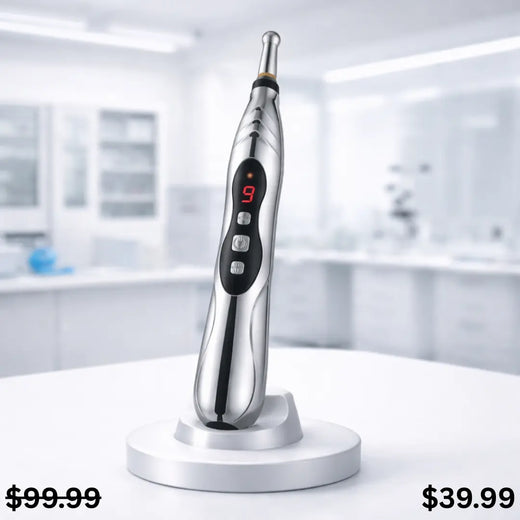
Tinnito™ V2 is a handheld neuromuscular stimulation device from Xeviola. Neuromuscular stimulation means a light electrical pattern on the muscle and nerve area under the tip. The auricular nerve sits behind the ear. The ball head is the tip people place on the skin behind the ear.
Use is short. Place the ball head on the skin behind the ear. Turn the device on for about 30 to 60 seconds. People feel a light tingling or tapping at that spot. The tingling or tapping means the tip is in contact with the skin over that nerve.
This device is not the hand pinch. The hand pinch is one hand on the soft skin between the thumb and the first finger. That pinch can change ear ringing for a moment. Tinnito™ V2 is what people use on the auricular nerve that can stay stuck ON, meaning the nerve keeps sending the ear-ringing signal. The page does not claim the device ends ear ringing.
The kit includes the pen and interchangeable heads, including the ball head for the skin behind the ear, plus a charging cable. The price on the product page is $39.99, down from the listed $99.99.
Check Tinnito™ V2 on the Official Store
Tinnito™ V2 by Xeviola is the behind-the-ear device people use for about 30 to 60 seconds on the auricular nerve. That nerve can stay stuck ON, which means it keeps sending the ear-ringing signal. The hand pinch on the soft skin between the thumb and the first finger is the demonstration that the signal can change for a moment. The device is the separate step on the nerve.
Step 1: Order Tinnito™ V2 at the price on the product page.
Step 2: When it arrives, use the ball head on the skin behind the ear for about 30 to 60 seconds.
Step 3: Notice the tingling or tapping at that spot, then decide from your own sessions whether the ear ringing changes for you.
You Can Return It Within 30 Days

The official store lists Tinnito™ V2 at $39.99, compared with $99.99. The same store posts a 30-day money-back guarantee.
Use the ball head on the skin behind the ear for about 30 to 60 seconds a session. If the ear ringing does not change in a way that matters to you, return the device inside that 30-day window under the store guarantee.
The old shiatsu trick is still the hand pinch: one hand on the soft skin between the thumb and the first finger. That press can change ear ringing for a moment, which shows the signal can change. Tinnito™ V2 is the device for the auricular nerve that can stay stuck ON.
The Hand Pinch Shows the Signal Can Change. The Device Goes on the Nerve.
Doctors don't mention the old shiatsu point for ear ringing: the soft skin between the thumb and the first finger. A pinch there can change the ear ringing for a moment. Covering the sound does not turn the signal off. The auricular nerve can stay stuck ON, which means the nerve keeps sending the ear-ringing signal.
Tinnito™ V2 is the behind-the-ear device people hold on that nerve for about 30 to 60 seconds.
$39.99 (listed at $99.99) · 30-day money-back · Official store only
Tinnito™ is not intended to diagnose, treat, cure, or prevent any disease. The hand pinch is not a cure. Results vary. Use as directed. If you have sudden hearing loss, severe pain, or neurological symptoms, seek medical care. These statements have not been evaluated by the Food and Drug Administration.