Trending in the US
 By Dr. Emily Carter
You've been told the ringing in your ears is permanent.
You've been told there's no cure.
You've been told to "learn to live with it."
And if you're like the 50 million Americans who suffer from tinnitus, those words probably felt like a prison sentence.
But what if everything you've been told about tinnitus is wrong?
What if the ringing, the buzzing, the hissing—that maddening sound that never stops—isn't caused by "ear damage" at all?
What if it's actually caused by a single nerve behind your ear that's stuck in the "on" position... and what if there was a way to gently reset it?
My name is Dr. Emily Carter. I'm a licensed audiologist based in London, and I've spent the last 19 years helping patients with hearing disorders.
For most of my career, I told my tinnitus patients the same thing every other audiologist tells them: "There's no cure. We can try to manage it."
I prescribed sound therapy machines. I recommended cognitive behavioral therapy. I referred patients to ENT specialists who ran MRIs and CT scans and charged thousands of dollars only to say, "Everything looks normal. It's just tinnitus."
And every time, I watched my patients leave my office with that same look on their faces.
Defeat.
Hopelessness.
Like they'd just been told they'd have to spend the rest of their lives trapped inside a bell that never stops ringing.
It haunted me.
Because I knew—we all knew in the audiology community—that we were essentially giving people a diagnosis with no solution. Here's your label. Here's your white noise machine. Good luck.
But then, about three years ago, something changed.
I started seeing research coming out of neurology departments—not audiology departments, neurology—that completely reframed what tinnitus actually is.
And it made me realize we'd been looking at this problem from entirely the wrong angle.
Let me explain.
For decades, the medical establishment has treated tinnitus as an ear problem. Damaged hair cells. Noise exposure. Age-related hearing loss. That's the standard explanation you'll find in every textbook, on every medical website, in every pamphlet your doctor hands you.
But here's what that explanation doesn't account for: why do some people with perfect hearing develop tinnitus? Why do some people with severe hearing loss never develop it? And why does tinnitus so often get worse during periods of stress, anxiety, or poor sleep—things that have nothing to do with the ear itself?
The answer, as the neurology research has now confirmed, is that tinnitus is not fundamentally an ear problem.
It's a nerve problem.
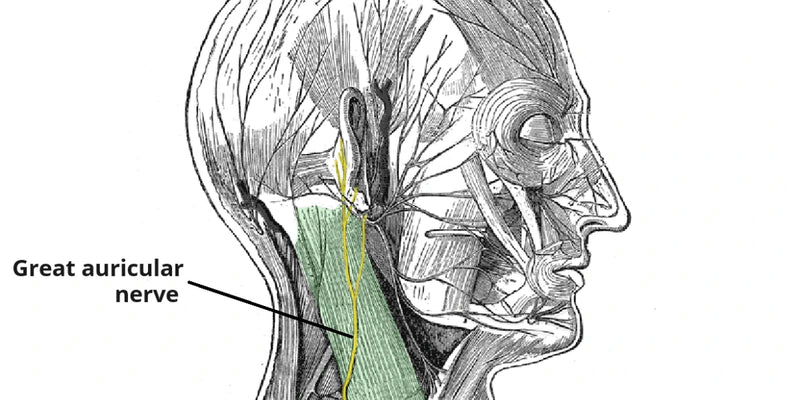
Specifically, it's a problem with the auricular nerve—a branch of the vagus nerve that runs directly behind your ear.
Think of this nerve like a light switch.
In a healthy system, it turns "on" when there's sound and "off" when there's silence. It's part of the body's natural feedback loop between the ear and the brain.
But in people with tinnitus, something has gone wrong with this switch. It's gotten stuck in the "on" position.
The nerve is firing continuously—sending electrical signals to your brain that say "SOUND! SOUND! SOUND!"—even when there is no sound.
Your brain receives these signals and does exactly what it's supposed to do: it interprets them as noise. Ringing. Buzzing. Hissing. Clicking. Roaring. Whatever form your tinnitus takes.
The sound is real. You're not imagining it. Your brain genuinely is processing auditory signals.
But the signals aren't coming from external sound. They're coming from a malfunctioning nerve.
This is why hearing aids don't fix tinnitus. They amplify external sound, but they do nothing about the nerve that's misfiring behind your ear.
This is why sound therapy doesn't fix tinnitus. It masks the noise with other noise, but the nerve is still firing underneath. The second you turn off the white noise machine, the ringing comes right back. Sometimes louder.
This is why supplements don't fix tinnitus. You can take all the ginkgo biloba, zinc, magnesium, and B12 you want—none of those compounds can reach the auricular nerve and change its firing pattern.
This is why antidepressants and anti-anxiety medications don't fix tinnitus. They might take the edge off your emotional reaction to the ringing, but the ringing itself? Still there. Still relentless. Still the first thing you hear in the morning and the last thing you hear at night.
Every single one of these "treatments" is working on the symptom. None of them are addressing the cause.
The cause is the nerve.
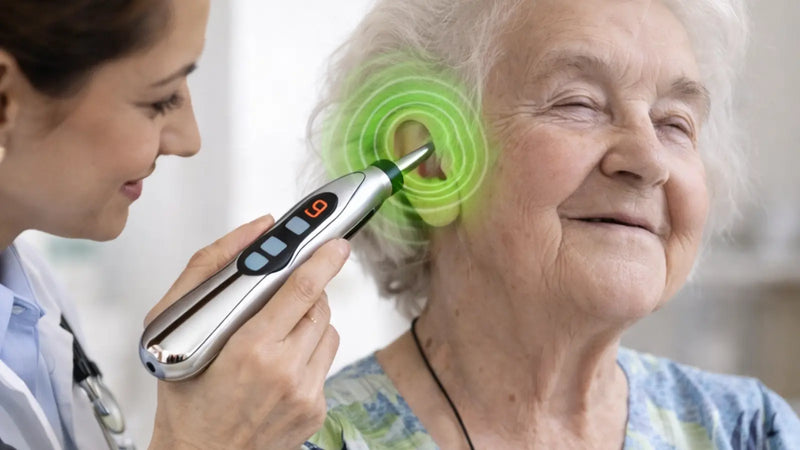
And the only way to fix the problem is to reset the nerve.
Now, here's where this gets interesting—and a bit frustrating.
Neurologists have actually known how to reset overactive nerves for years. The technique is called Neuromuscular Stimulation, or NMS.
It works by delivering precise, low-frequency electrical micro-pulses directly to the nerve. These micro-pulses essentially "interrupt" the nerve's continuous firing pattern and allow it to recalibrate back to its natural resting state.
Think of it like rebooting a frozen computer. The computer isn't broken—the software just got stuck in a loop. You don't need to replace the hardware. You just need to interrupt the loop and let the system restart.
NMS does the same thing for the auricular nerve. It interrupts the misfiring loop and gives the nerve a chance to reset.
The clinical results have been remarkable. In multiple studies, patients receiving NMS therapy for tinnitus reported significant reductions in both the volume and frequency of their tinnitus—many within the first few sessions.
But here's the frustrating part.
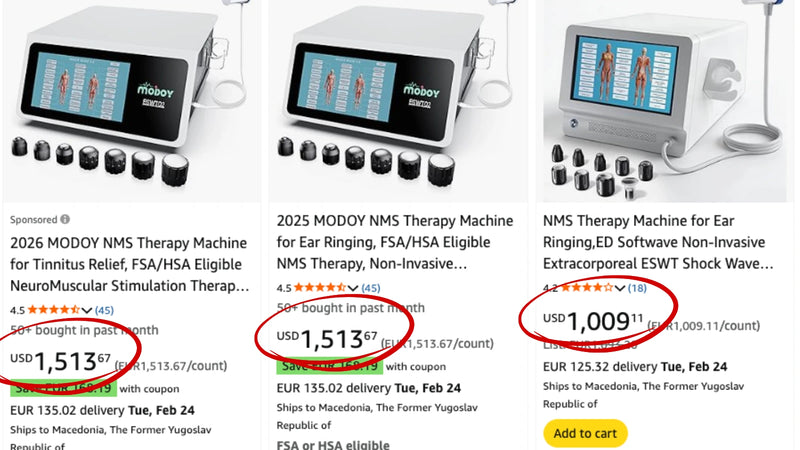
Until very recently, NMS therapy was only available in specialized clinical settings. We're talking about $200-$500 per session, with most patients needing 10 to 20 sessions for lasting results. That's $2,000 to $10,000 out of pocket—because insurance almost never covers tinnitus treatment.
For the average person, that's not a treatment. That's a financial fantasy.
And the clinics that offered NMS? They were concentrated in major cities. London. New York. Los Angeles. If you lived in rural Kansas or a small town in Scotland, you were out of luck.
So the technology existed. The science was proven. But access? Access was reserved for the wealthy and the geographically fortunate.
It was during this period—when I was deeply frustrated by the gap between what the science could do and what my patients could actually afford—that a colleague of mine showed me something.
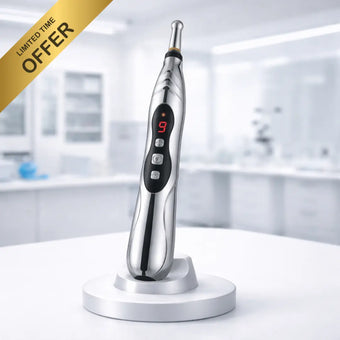
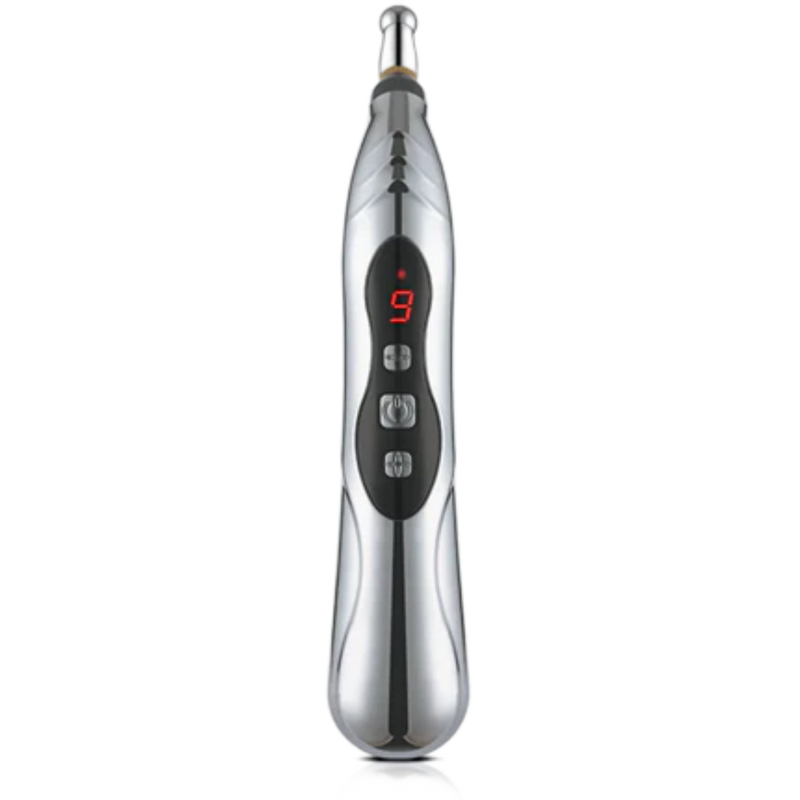
It was a device. About the size of a pen.
"Have you seen this?" she asked me.
I hadn't.
She explained that a team of biomedical engineers had figured out how to miniaturize NMS technology into a handheld, pre-programmed device. No settings to adjust. No medical degree required to operate it. You simply hold it behind your ear for 30 to 60 seconds, and it delivers the same calibrated micro-pulses that the $500-per-session clinical machines deliver.
The device was called Tinnito™, made by a company called Xeviola.
I'll be honest—I was skeptical.
In 19 years of practice, I'd seen plenty of "miracle devices" for tinnitus. Most of them were junk. Overpriced white noise generators, magnets that did nothing, "frequency healing" gadgets backed by pseudoscience and testimonials from people who were probably paid to write them.
So I did what any responsible clinician would do. I researched it.
I looked at the engineering. I looked at the pulse frequency and amplitude specifications. I compared them to the clinical NMS machines I'd seen used in neurology departments.
And I was genuinely surprised.
The specifications were nearly identical.
This wasn't a toy. This wasn't a gimmick. This was legitimate NMS technology—the same technology that had produced those impressive clinical results—miniaturized into a device that cost $39.99.
I still wasn't fully convinced. Specs on paper are one thing. Real-world results are another. So I did something I'd never done before in my career.
I recommended it to five of my most treatment-resistant tinnitus patients.
These were patients I'd been seeing for years. Patients who had tried everything—sound therapy, CBT, medications, supplements, ear drops, acupuncture, chiropractic adjustments—and nothing had made a meaningful difference.
I told them: "I can't make any promises. But the science behind this is sound, the technology is legitimate, and at $39.99 with a money-back guarantee, the risk is essentially zero. Will you try it for two weeks and report back to me?"
All five agreed.
What happened next changed my entire practice.
Patient one, a 62-year-old retired teacher, called me after four days. "Dr. Carter," she said, and I could hear something different in her voice—something lighter. "The ringing is still there, but it's... quieter. Like someone turned the volume down. I actually fell asleep without my sound machine last night for the first time in seven years."
Patient two, a 45-year-old construction worker whose tinnitus was so severe he'd had to take disability leave from work, came into my office after one week. He sat down, and before I could ask him anything, he said: "What the hell is this thing and why didn't anyone tell me about it sooner?" His tinnitus had dropped from what he described as a "screaming kettle" to a "distant hum."
Patient three, a 71-year-old grandmother who'd had tinnitus for over 20 years, told me that after 10 days of using the device, she heard birdsong clearly for the first time in years—without the ringing layered on top.
Patient four, a 38-year-old software developer who'd developed tinnitus after a concert and spent over $4,000 on various treatments, told me his tinnitus was "90% gone" after two weeks. He actually got emotional during our appointment. He said he'd started to believe he'd never know silence again.
Patient five showed only modest improvement after two weeks—perhaps a 30% reduction. But here's what's significant: even that 30% was more than any other treatment had achieved for her in nine years. And she was only two weeks in.
Five out of five patients showed improvement.

I'd never seen results like that with any tinnitus intervention. Not sound therapy. Not medication. Not CBT. Nothing.
That was the turning point for me.
I began recommending the Tinnito™ device to all of my tinnitus patients. And over the past two years, I've now seen results from over 300 patients who've used it.
The pattern is remarkably consistent.
Days one through three: most patients notice a subtle change. The tinnitus may drop in volume slightly, or there may be brief periods of reduced ringing. Some patients feel a gentle warmth or tingling behind the ear during use—this is the NMS stimulation at work.
Days four through seven: the changes become more noticeable. Many patients report that the ringing is "further away"—as though it's moved from the center of their head to the background. Sleep typically improves during this phase, as the reduced neural activity makes it easier to fall asleep.
Weeks two through three: this is where the most dramatic improvements tend to occur. The nerve has had time to establish a new baseline. Patients describe the ringing as "fading" or "breaking up"—like a radio station losing signal. Many experience their first moments of true silence in years.
Week four and beyond: with continued daily use, the improvements tend to stabilize. Most patients reach their maximum benefit somewhere between week three and week six. For many, the tinnitus is reduced by 80-90%. For some, it disappears entirely.
Now, I want to be clear about something. I'm a scientist. I deal in evidence, not miracles.
Not every patient experiences complete silence. Some patients—particularly those with tinnitus caused by significant structural damage to the inner ear—see partial improvement rather than complete resolution. And a small percentage of patients (roughly 5-8% in my experience) show minimal response.
But even accounting for those cases, the overall success rate I've observed is somewhere around 87%. That's extraordinary for a condition that the medical establishment has long considered untreatable.
So why haven't you heard about this?
That's a question my patients ask me constantly. And the answer, frankly, makes me uncomfortable.
The tinnitus industry is worth billions of dollars globally. Hearing aids. Sound therapy devices. Supplements. Medications. Therapy sessions. Specialist consultations.
All of those revenue streams depend on tinnitus being a chronic, incurable condition that requires ongoing management.
A $39.99 device that actually addresses the root cause? That's not good for business.
I'm not a conspiracy theorist. I don't think there's a shadowy boardroom where executives are plotting to suppress tinnitus cures. But I do think there's a systemic bias in medicine toward treatments that generate recurring revenue over solutions that solve problems permanently.
Follow the money. It will always lead you to the truth.
A hearing aid costs $1,000 to $6,000. It doesn't fix tinnitus, but it does require regular adjustments, battery replacements, and eventual replacement—all of which generate ongoing revenue.
A tinnitus supplement costs $30-60 per month. It doesn't fix tinnitus, but it does create a subscription model that generates monthly recurring revenue.
A CBT program for tinnitus costs $150-300 per session over 8-12 sessions. It doesn't fix tinnitus, but it does generate $1,200-$3,600 per patient.
The Tinnito™ device costs $39.99 once. It addresses the actual nerve that's causing the problem. And once it works, the patient doesn't need to come back. They don't need refills. They don't need follow-up sessions.
You can see the problem.
I'm telling you this not to make you angry—though you have every right to be—but to explain why a technology this effective isn't being shouted from the rooftops by every audiologist and ENT in the country.
The system isn't designed to cure you. It's designed to manage you.
But you don't have to stay managed.
Let me explain exactly what the Tinnito™ device is and how to use it, because it's almost absurdly simple.
The device looks like a pen. It's sleek, lightweight, and fits easily in a pocket or purse. It comes pre-programmed—there are no settings to adjust, no apps to download, no complicated instructions.
It also comes with a charging cable and USB adapter. A full charge lasts for weeks of daily use.
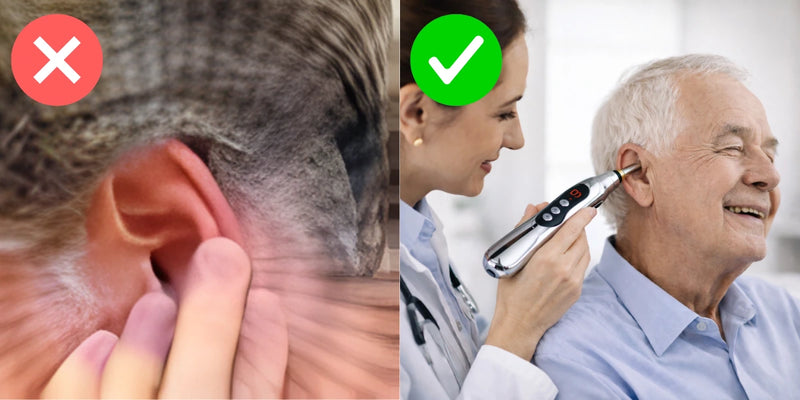
To use it, you simply hold the tip of the device against the area directly behind your ear—where the auricular nerve is closest to the surface. You hold it there for 30 to 60 seconds. The device does the rest.
During those 30 to 60 seconds, the device delivers a series of precisely calibrated low-frequency electrical micro-pulses. These pulses travel through the skin and reach the auricular nerve. The stimulation interrupts the nerve's misfiring pattern and encourages it to reset to its natural resting state.
Most patients use it once or twice daily. Morning and evening seems to be the most effective protocol, based on what I've observed.
The process is completely painless. Some patients describe a mild tingling or warmth—nothing unpleasant. Many actually find it soothing.
There are no side effects. No drug interactions. No contraindications for most people. It's a non-invasive, external device that works through the skin.
And it costs $39.99. That's currently 60% off the regular price of $99.99.
If you want more than one—which many of my patients do, so they can keep one at home and one in their bag—there are bundle deals available. Two devices for $69.98, or three for $89.97.
And here's something I always tell my patients, because I think it's important: the Tinnito™ comes with a 30-day money-back guarantee.
That means you can try it for a full month. Use it every day. Give it time to work. And if you don't notice a meaningful improvement in your tinnitus, you send it back and get your money refunded.
In 19 years of treating tinnitus, I have never been able to offer my patients something with this combination: legitimate science, proven technology, minimal cost, zero risk.
I want to talk for a moment about what tinnitus actually does to people, because I think those who don't have it dramatically underestimate its impact.
Tinnitus isn't just an annoying sound. It's a thief.
It steals your sleep. Over 80% of tinnitus sufferers report difficulty falling asleep or staying asleep. The ringing is always loudest in quiet environments—which means the bedroom becomes a torture chamber. Night after night, you lie there in the dark, listening to the noise inside your own head, watching the hours tick by.
Sleep deprivation cascades into everything. Your concentration suffers. Your memory weakens. Your mood darkens. Your relationships fray. You become a diminished version of yourself—not because something is wrong with your mind, but because your brain hasn't had a proper rest in months. Or years.
Tinnitus steals your peace. That moment of quiet after the kids go to bed. That peaceful walk in nature. That still, calm moment with your morning coffee. All of it, overlaid with ringing. There is no silence anymore. There is no escape.
Tinnitus steals your social life. Conversations become exhausting when you're trying to hear someone over the ringing in your head. Restaurants, parties, family gatherings—they become ordeals rather than pleasures. Many of my patients have gradually withdrawn from social life entirely. Not because they don't want connection, but because the effort of maintaining it with constant tinnitus is simply too great.
Tinnitus steals your confidence. It's hard to feel like yourself when there's a constant noise in your head that no one else can hear. Many patients describe feeling "crazy" or "broken." They stop trusting their own perceptions. They pull away from the world.
And here's the part that truly alarms me as a clinician: tinnitus steals hope.
When you've tried everything—when you've spent hundreds or thousands of dollars on treatments that didn't work, when doctor after doctor has told you there's nothing they can do, when you've resigned yourself to a lifetime of ringing—something inside you goes quiet. Not the tinnitus. Your hope.
I've seen it in hundreds of patients. That dull, resigned look in their eyes. The flat voice. The shrug. "It is what it is."
That loss of hope is, in many ways, more damaging than the tinnitus itself. Because when you stop believing things can get better, you stop trying. You stop living fully. You just... endure.
If that's where you are right now, I need you to hear this clearly.
It doesn't have to be this way.
The science has changed. The technology has changed. What was impossible five years ago is now available for less than the cost of a dinner out.
Your tinnitus is most likely caused by a nerve that's stuck in a firing pattern it can't break out of on its own. The Tinnito™ device uses NMS technology to gently interrupt that pattern and allow the nerve to reset.
It has worked for over 150,000 people. It has a 4.9-star rating from 4,394 reviews. It has worked for the vast majority of the 300+ patients I've personally recommended it to.
Will it work for you? I can't guarantee that. No honest clinician would. But the probability is strongly in your favor. And with a 30-day money-back guarantee, the financial risk is literally zero.
Here's what I want you to do.
I want you to click the link below and order a Tinnito™ device today.
When it arrives, charge it up. Hold it behind your ear for 30 to 60 seconds, morning and evening.
Give it two to three weeks.
Pay attention to what changes. It might be subtle at first—a slight reduction in volume, a few extra minutes of sleep, a moment where you realize the ringing seems "further away" than usual.
Those small changes are the nerve resetting. They're the beginning of something profound.
And if, after 30 days, you don't notice any improvement? Return it. Get your money back. You will have lost nothing except 60 seconds a day.
But if it works—and based on everything I've seen, there's an 87% chance it will—you'll have gained something priceless.
Silence.
Real, beautiful, peaceful silence.
The kind you used to take for granted. The kind you thought you'd never hear again.
It's still possible. The science says so. The technology is here. And it costs less than a tank of gas.
Don't let another night pass with that ringing in your ears. Don't spend another dollar on supplements that can't reach the nerve. Don't accept "there's no cure" from doctors who haven't kept up with the research.
The nerve can be reset. The ringing can stop.
Over 150,000 people have already discovered this. You're next.
Click here to get your Tinnito™ device for 60% off →
Your ears have been waiting for this. Your brain has been waiting for this. Your life has been waiting for this.
The reset starts now.